
Free Love Language Test: Insight, Clarity, and Better Connection
Take 5 Love Languages Test Online
Get StartedWhat Is a Love Language Profile and Why It Matters
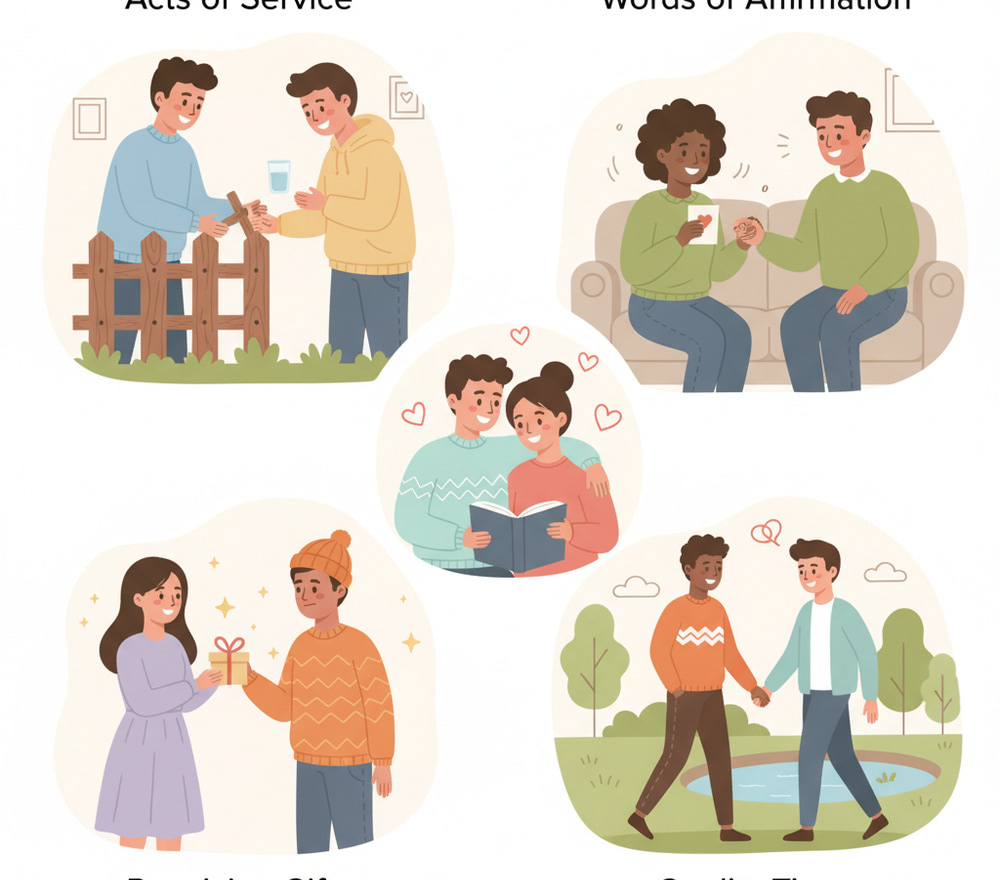
Most people communicate care in specific ways, yet we often expect others to read our minds. The concept of love languages surfaces these preferences and makes them visible, measurable, and discussable. By translating feelings into observable behaviors like words of affirmation, quality time, acts of service, gifts, and physical touch, you gain a shared vocabulary with partners, friends, and even family. That shared language reduces misfires, boosts emotional safety, and turns vague guesses into repeatable habits. With a clear profile, you can ask for what you need and recognize what others are trying to give.
Beyond pop‑psychology buzzwords, a well‑designed questionnaire turns soft impressions into patterns you can actually track. You can build that awareness with a concise free love language test that highlights which behaviors actually make you feel most cared for. This type of quiz offers practical insight without requiring a deep dive into theory, and the results are simple enough to explain over coffee. In minutes, you’ll have a starting point for more empathetic conversations.
Awareness becomes powerful when it is shared, because language only matters when both sides understand the terms. For quick orientation, many sites host a love language test free option that mirrors the original framework without paywalls. That accessibility lowers friction, invites curiosity, and encourages partners to experiment with new behaviors. As you compare takeaways, you’ll notice how small adjustments, like a deliberate compliment or an uninterrupted evening, create outsized emotional returns.
How the Assessment Works: Questions, Scoring, and Reliability
Most instruments present paired statements and ask you to choose which scenario feels more supportive. Over a series of prompts, your preferences aggregate into a rank‑ordered profile. Good assessments balance the domains evenly, phrase items clearly, and avoid leading wording. When scores are close, that usually means you value multiple modes and can flex across situations, whereas a large gap suggests a strong primary preference. Retaking the quiz after significant life events can reveal how context nudges your needs, which is a normal and healthy shift.
For those taking the quiz together, coordination matters almost as much as accuracy. Partners often appreciate a joint flow where both take the quiz; in that context, a free love language test couples pathway lets you compare patterns without pressure. When each person reflects on the same evening, mood, and environment, the results become easier to interpret. You can also journal a quick note about your day to add context to your future comparisons.
| Component | What It Measures | How to Use It | Example Prompt |
|---|---|---|---|
| Words of Affirmation | Verbal appreciation and encouragement | Schedule sincere check‑ins and specific praise | “I feel best when you acknowledge my effort.” |
| Quality Time | Focused, undistracted presence | Block device‑free time and shared activities | “Let’s spend an hour walking and talking.” |
| Acts of Service | Helpful actions that lighten load | Trade tasks and anticipate needs | “I made dinner so you can rest.” |
| Gifts | Thoughtful tokens and symbols | Collect small mementos tied to meaning | “I brought your favorite tea from that shop.” |
| Physical Touch | Warm, consensual contact | Agree on preferred contexts and boundaries | “A hug after work helps me reset.” |
Comparison is most useful when it sparks empathy rather than score‑keeping. If you want a shared dashboard that aligns two profiles, look for a free love language test for couples that stores each person’s answers for side‑by‑side reflection. Then, translate insights into small experiments you can run this week, and evaluate what changed the tone of your interactions. Over time, those micro‑shifts compound into deeper trust.
Benefits for Singles and Partners: From Discovery to Daily Practice
Clarity about preferences does more than reduce conflict; it also reveals strengths. Someone with high quality time values might be great at planning meaningful dates, while a partner high in acts of service may excel at logistics that keep life humming. When you spot these strengths, you can divide responsibilities in a way that feels fair and generous, not transactional. The same understanding applies to friendships, where recognition of someone’s preferred channel can revive a drifting connection.
Practical feedback is essential if you want the insight to stick beyond a one‑time quiz. When you want immediate clarity after submitting answers, pick a tool that provides a free love language test and results summary with practical next steps. Look for actionable suggestions tailored to each domain, such as scripts, date ideas, or boundary phrases. Then, try one suggestion per week and track whether your sense of connection improves, stagnates, or grows.
- Translate scores into specific, observable behaviors you can repeat.
- Schedule dedicated time to review what worked and what felt awkward.
- Swap feedback using “I feel” statements to keep discussions safe.
- Set a 30‑day check‑in to refine your shared playbook.
Exploration can be low‑stakes and playful while still grounded in research‑backed principles. Individuals exploring compatibility may start with a five love languages free test to calibrate expectations before a first date. That early insight prevents mismatched efforts, like buying gifts for someone who craves focused attention, and points you toward experiences likely to resonate. The result is fewer misunderstandings and a faster path to mutual understanding.
Interpreting Scores and Turning Insight Into Action
A profile is only as useful as the habits you build from it. Begin by identifying your top one or two domains, then design micro‑rituals you can sustain during busy weeks. If your partner values touch, a three‑second squeeze when you reunite can set a warmer tone for the evening. If you score high on words, agree to share one specific appreciation before bed, even on tough days.
Reflection keeps the process honest and adaptive as life evolves. To deepen insight, repeat a free five love languages test every six months and track how life changes nudge your preferences. Major transitions, new jobs, parenting, caregiving, often shift which behaviors feel most supportive. By reviewing notes and comparing trends, you’ll spot subtle pivots early and adjust before resentment builds.
Some people enjoy more detailed analytics and workflow support to maintain momentum. Those tracking progress across coaching programs sometimes prefer a 5 love languages free test variant that exports raw scores for spreadsheets. With that data, you can correlate rituals with mood journals, identify high‑impact habits, and plan weekly experiments. Small wins stack up when you treat them like a cycle of hypothesis, test, and iterate.
- Choose one ritual per priority domain and put it on the calendar.
- Use a brief weekly debrief to note what felt nourishing or neutral.
- Retire tactics that underperform and double down on what works.
Common Mistakes and Pro Tips for Consistent Progress
Misinterpretation often happens when couples assume identical needs or view scores as fixed labels. Instead, treat the profile as a dynamic snapshot that invites curiosity. Avoid weaponizing the language, no one wants their preferences used as a scoreboard. Focus on observable behaviors, seek consent, and stay flexible as seasons change. When communication stalls, return to basics: ask open questions, reflect back what you heard, and agree on one small experiment.
Reliability improves when you control for context and repetition. Before you compare with friends, run a reliable free 5 love languages test twice at different times of day to reduce mood bias. Keep notes about sleep, stress, and recent conflicts to separate situational noise from stable preferences. Over several weeks, patterns will emerge, and you’ll have more confidence in your action plan.
- Never assume your partner “should know”; make requests clear and kind.
- Balance spontaneity with structure so rituals don’t feel like chores.
- Review boundaries around touch and time, and revisit them regularly.
- Celebrate progress with small markers to reinforce the habits you want.
Gentle entry points make reflection less intimidating and more sustainable over time. For people new to attachment work, a gentle free love test can lower the barrier to entry while still delivering useful pointers. Pair that first step with a short conversation guide, and you’ll move from curiosity to practice quickly. The key is to stay playful, respectful, and consistent.
FAQ: Answers to Common Questions About Love Language Testing
How accurate are these quizzes for everyday relationship decisions?
They are directional tools, not diagnostic instruments. Accuracy improves when items are clearly worded and when you retest after big life changes. Because the goal is behavior change, even a rough profile can spark useful experiments that elevate connection.
Can I take the assessment online without paying or creating an account?
Yes, many platforms offer accessible versions with instant summaries. If convenience matters, choose a reputable free online love language test that lets you save or print takeaways afterward. That way, you can bring notes to your next check‑in and keep momentum going.
Should couples take the quiz together or separately?
Either approach works if you agree on timing and mood beforehand. Many partners take it separately first to avoid influence, then discuss results while calm and unrushed. You can revisit the conversation a week later to see which experiments felt most natural.
What if my scores are tied across two or three languages?
Ties are common and suggest multiple effective channels. Start by rotating rituals from each strong domain for a few weeks, then notice which actions produce the biggest lift. Over time, the most reliable patterns will stand out, guiding your shared routines.
Is there a way to try it on mobile with quick feedback?
Absolutely, several mobile‑friendly versions load quickly and summarize insights in a few screens. For on‑the‑go convenience, seek a streamlined love language free online test that offers clear next steps and lightweight tracking features. Short doesn’t have to mean shallow when the prompts are well designed.