
Five Love Languages Test: Benefits and Practical Tools
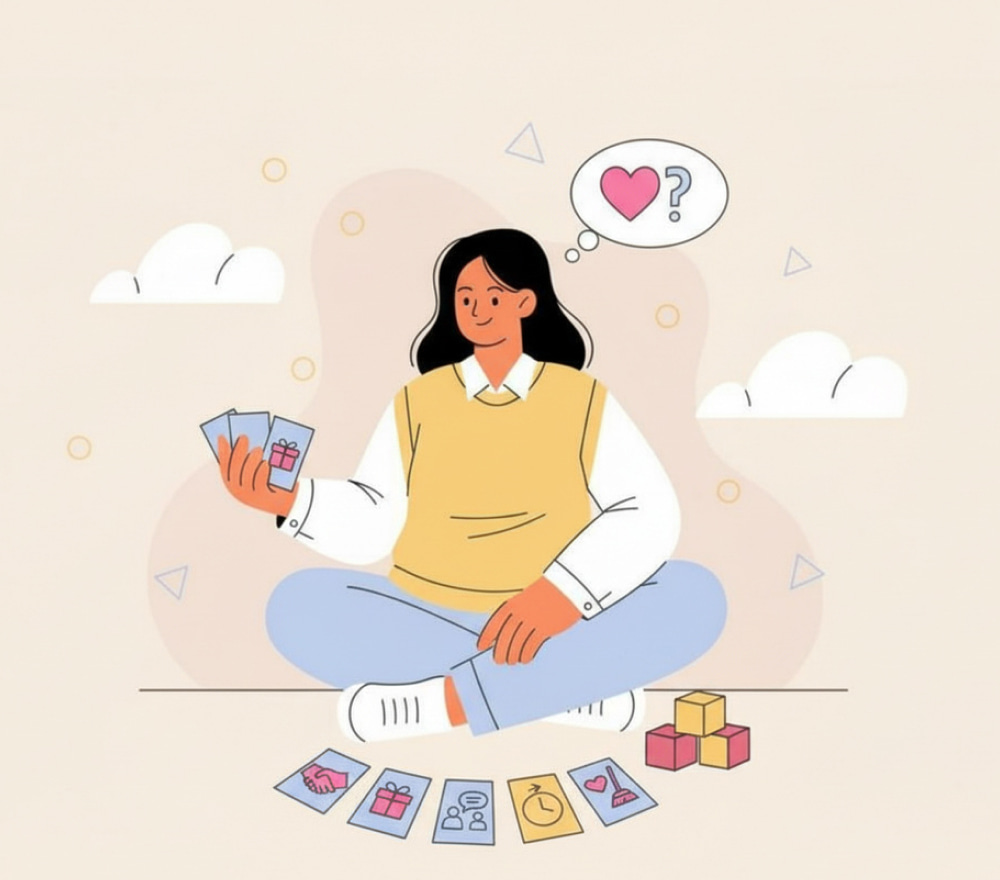
Take 5 Love Languages Test Online
Get StartedUnderstanding the Test and Why It Resonates
Love is often expressed with good intentions, yet partners can miss each other’s signals and feel unseen. A simple, memorable framework helps couples decode how affection lands, turning confusion into connection. By naming core patterns of emotional exchange, partners build a shared vocabulary, reduce guesswork, and create rituals that feel natural rather than forced. The outcome is not just sweeter moments but a durable map for navigating stress, change, and conflict.
At the center of this approach, the term five love languages describes distinct ways people prefer to give and receive care. Popularization through five love languages Gary Chapman brought accessible language to therapy rooms and living rooms alike. Even skeptics tend to appreciate the pragmatic angle, because the framework invites behavioral experiments and feedback rather than rigid labels. When used collaboratively, it becomes a gentle feedback loop: try a behavior, observe the response, calibrate the next gesture, and reinforce what works.
Benefits multiply when couples commit to small, consistent actions rather than grand gestures. Momentum grows from everyday habits that match a partner’s preferred channel. Over time, mutual attunement boosts trust, reduces defensive reactions, and softens difficult conversations. These advantages also support parenting, friendship, and self‑care, because the same principles illuminate what makes individuals feel secure and valued across contexts.
- Clear vocabulary reduces mind‑reading and assumptions.
- Micro‑rituals sustain intimacy between major milestones.
- Customized gestures minimize wasted effort and resentment.
- Shared experiments turn conflict into learning opportunities.
The Five Modes Explained and Psychological Underpinnings
At its core, this model identifies five channels, words, time, service, gifts, and touch, that carry emotional nutrients differently for different people. In practical terms, the inquiry what are the five love languages prompts a tour of affirmation, presence, helpful actions, thoughtful tokens, and affectionate contact. Each channel maps to specific cues that register as “you matter to me,” and the mix can shift subtly across seasons of life. Understanding these nuances prevents stereotyping and supports adaptive, compassionate choices.
For quick review, a concise five love languages summary distills key traits: verbal encouragement and appreciation; undivided attention and shared experiences; proactive assistance with tasks; meaningful mementos; and warm, consensual physical connection. Attachment science offers context here, since felt security often rises when a partner reliably meets the preferred channel. Cognitive load theory also helps explain why mismatches frustrate people, because repeated decoding taxes attention and dampens the positive impact of well‑meant gestures.
Effective partners notice micro‑signals: eyes lighting up after a spoken compliment, deeper relaxation during quiet togetherness, visible relief when chores are handled, sentimental smiles around small surprises, or grounded ease during a hug. These observations, paired with compassionate curiosity, allow the framework to serve as a living conversation rather than a static label. The goal is responsiveness, not perfection, and a rhythm that feels safe, energizing, and sustainable.
- Words of Affirmation: specific, sincere, timely recognition.
- Quality Time: presence without competing distractions.
- Acts of Service: initiative that removes friction from daily life.
- Receiving Gifts: symbolic meaning over monetary value.
- Physical Touch: affectionate, attuned, and enthusiastically consensual.
Quick Reference Table and Practical Examples
Reference tools make it easier to translate insight into consistent action, especially during busy weeks. For instance, a practical mid‑week checklist functions like a compact five love languages list that you can adapt to routines and energy levels. The trick is keeping gestures small, repeatable, and aligned with your partner’s current needs. A light system, green for energizing, yellow for neutral, red for draining, can help monitor impact over time.
To compare patterns at a glance, the following five love languages chart organizes core needs, everyday examples, pitfalls to avoid, and simple repair phrases. Use it as a conversation starter instead of a verdict, then tweak the ideas to reflect personal preferences. Revisit the grid after arguments or transitions to recalibrate rituals with empathy and creativity.
| Language | Core Need | Everyday Examples | Common Pitfall | Repair Phrase |
|---|---|---|---|---|
| Words of Affirmation | To be seen and named positively | Specific praise, gratitude texts, supportive notes | Generic compliments or backhanded remarks | “I appreciate you for X because it helped me with Y.” |
| Quality Time | Undivided attention and shared focus | Device‑free walks, coffee chats, co‑reading | Multitasking or frequent interruptions | “Let’s set aside 20 minutes just for us tonight.” |
| Acts of Service | Meaningful help that reduces friction | Prepping meals, handling logistics, errands | Assuming instead of asking what helps | “What task would lighten your load today?” |
| Receiving Gifts | Tangible symbols of thoughtfulness | Favorite snack, printed photos, tiny keepsakes | Substituting price for personal meaning | “I saw this and it reminded me of your smile.” |
| Physical Touch | Warm, consensual closeness | Hugs, hand‑holding, cozy couch time | Touch without checking comfort or timing | “Would a hug feel good right now?” |
When reviewing the grid, choose one micro‑gesture per day and track the emotional ripple it creates. Calibrate frequency and intensity rather than assuming “more is better.” Over weeks, patterns emerge that reveal which rituals deliver the greatest sense of safety, delight, and partnership, allowing both people to invest effort where it matters most.
Discovering Your Primary Language and Assessments
Many people identify their dominant channel through reflection, conversation, and small experiments. Others appreciate the structure of a reputable five love languages test that offers hypotheses to explore in everyday life. Self‑reports are just a starting point, so combine results with real‑world observations. Partners can compare notes, align on one or two experiments, and revisit the plan after a week to see what resonated.
Budget‑minded learners sometimes prefer accessible tools, including a five love languages free test provided by trustworthy organizations. For even broader accessibility, opting for a five love languages test free option removes barriers for students and families. Couples who enjoy activities might schedule a shared five love language test and debrief over coffee to deepen understanding. Whatever the format, interpret outcomes flexibly and commit to trying small, repeatable behaviors before drawing firm conclusions.
- Write down three gestures that felt nourishing in the past week.
- Ask your partner to rank those gestures by impact, from most to least.
- Choose one new ritual to test for seven days, then review together.
- Log energy levels and mood changes alongside relationship check‑ins.
Applying Insights in Daily Life, Conflict, and Growth
Insights become powerful only when translated into routines that survive busy calendars, stress, and mood swings. After completing an assessment, thoughtfully interpreted five love languages test results should guide specific, scheduled behaviors rather than vague intentions. Couples who time‑block care rituals tend to maintain momentum, because the plan protects space for connection. When life gets chaotic, even tiny gestures act like emotional “bridges” that prevent drift.
During conflict, switch to de‑escalation moves aligned with each person’s preferred channel and nervous system state. Keep validation statements short for word‑oriented partners, or prioritize a quiet walk for those who relax with presence. Service‑focused partners may feel safer once a practical snag is removed, while touch‑oriented partners benefit from a consent‑based hug after cooling down. Debriefs work best when brief, specific, and generous with acknowledgment.
- Anchor one daily ritual to an existing habit, such as morning coffee.
- Use a weekly check‑in to retire stale gestures and add fresh ones.
- Reserve a “repair kit” list for stressful days to reduce decision fatigue.
- Celebrate micro‑wins to reinforce the behaviors you want more of.
Parenting and Family Dynamics
Children express needs through behavior long before they can articulate subtle preferences. Caregivers often rely on a tailored five love languages for kids test to glean patterns that support calmer routines and stronger bonds. Because developmental stages shift quickly, families should revisit preferences regularly and keep experiments playful. The aim is to offer security and delight through developmentally appropriate, culturally sensitive gestures.
In practice, word‑oriented children glow with specific praise, while time‑oriented kids savor shared play without screens. Service can look like prepping a backpack the night before school, and tangible tokens might be stickers or a found feather with a story attached. For touch‑oriented children, consent and attunement are crucial, with hugs offered and never demanded. Family meetings help kids voice what works and co‑create simple rituals everyone can sustain.
- Rotate rituals so each child’s preference gets airtime weekly.
- Teach siblings to recognize one another’s favorite gestures.
- Use bedtime to reinforce secure attachment with calm, predictable routines.
- Track which gestures soothe conflict fastest and repeat those first.
FAQ: Expert Answers to Common Questions
How many love languages can someone have?
Most people show a primary channel and a secondary one that rises in specific contexts. Stress, health, and life transitions can change the mix temporarily, so remain flexible. The practical goal is responsiveness, not a fixed identity label.
Can partners have completely different preferences?
Yes, and that’s common. Differences become manageable when couples treat them as translation tasks rather than deal‑breakers. Shared calendars, small experiments, and consistent feedback make diversity an advantage instead of a hurdle.
Does the framework work outside romantic relationships?
Absolutely, because it’s ultimately about how humans register care and safety. Families, friends, and teams benefit from clearer requests and targeted gestures. Adapt intensity, boundaries, and frequency to fit each relationship context.
What if my partner thinks the model is too simple?
Invite a time‑boxed trial with concrete behaviors and brief check‑ins. The lived results often speak louder than theory debates. If skepticism continues, integrate insights from attachment, nervous system regulation, or values‑based planning to add depth.
How do we keep rituals fresh over time?
Retire gestures that feel stale and co‑design new ones each season. Track what reliably soothes, energizes, or reconnects you after conflict. A quarterly review protects space for novelty while honoring proven foundations.