
Different Types of Love Language: Understanding Benefits
Take 5 Love Languages Test Online
Get StartedWhat Love Languages Are and Why They Matter
People rarely experience affection in identical ways, and that simple truth can make relationships feel complicated or effortless depending on how partners communicate. The idea behind love languages is that expressions of care land best when they match the receiver’s preferred cues. Words may thrill one person, while time together or thoughtful assistance might resonate more strongly with another. Recognizing this variety does not box anyone in; it simply illuminates patterns you can use to connect with less friction and more fulfillment.
As you look closer, you notice how micro-moments of connection accumulate into enduring trust, especially when small gestures align with personal needs. In modern conversation, the phrase love language types helps people name those preferences without judgment or guesswork. Couples, friends, and family members leverage that shared vocabulary to reduce mixed signals and create momentum toward mutual understanding. When partners compare notes on what feels meaningful, they stop overspending energy on signals that go unnoticed and redirect attention to rituals that reliably nurture the bond.
- Reduce misunderstandings by translating intent into the receiver’s preferred “channel.”
- Strengthen emotional safety with consistent and recognizable behaviors.
- Improve conflict recovery by offering comfort that actually soothes.
- Build durable intimacy through aligned daily habits, not grand gestures alone.
- Foster self-awareness that makes every relationship, not just romance, more resilient.
The Five Core Expressions Explained with Nuance
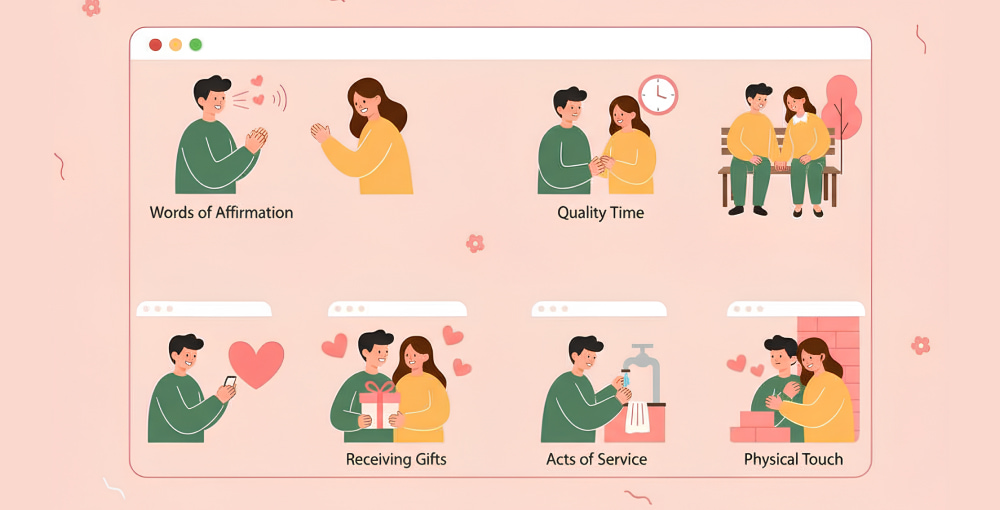
Across cultures and contexts, people commonly describe five recurring ways care is expressed: words of affirmation, quality time, acts of service, receiving gifts, and physical touch. Each pathway has depth beyond the label, and each can be dialed up or down based on context, history, and personality. Two people may share the same top style yet use very different rituals, and that’s perfectly normal. What counts is not the category itself but the specific behaviors that feel authentic and sustainable for you.
When you’re first mapping what resonates, it helps to explore the breadth and subtlety of choice within the 5 types of love language framework. Rather than chasing perfection, treat the process like a curious audit of what restores energy and communicates care efficiently. Many readers also ask how professionals describe the broader model, and they often encounter the phrase types of love language in books, workshops, and coaching materials. In practice, it’s less about being fluent in all styles and more about learning enough in your partner’s preferred dialect to be clearly understood.
- Words of affirmation: appreciative notes, encouraging phrases, specific praise.
- Quality time: undistracted presence, shared focus, rituals of togetherness.
- Acts of service: helpful tasks, anticipatory support, problem-smoothing.
- Receiving gifts: symbolic tokens, surprise treats, meaningful mementos.
- Physical touch: affectionate contact, grounding embraces, reassuring gestures.
Relationship Benefits Backed By Practice
The strongest relationships display a kind of elegant efficiency: partners invest effort where it produces the largest emotional return. This alignment doesn’t erase differences; it harmonizes them. When a person who craves presence receives undivided attention or one who values reassurance hears precise appreciation, the nervous system relaxes. That calm enables better problem-solving, kinder conflict, and faster repair after inevitable disagreements. Over time, the relationship feels less like a mystery and more like a reliable home base.
Another powerful advantage is how this lens clarifies romantic rhythms across stages of commitment, parenting, and stress. In long-term partnerships, people often cycle through preferences as life evolves, expanding the palette through which they experience different types of love across years. Teams and families report similar effects when they deliberately trade signals that match the moment, thereby strengthening shared purpose. Even in friendships, intentional gestures accelerate trust by showing that you truly get what matters to the other person.
Couples also cite higher satisfaction when they practice flexibility rather than rigidity. That’s why educators emphasize the spectrum captured by different types of love languages as an invitation to mix, adapt, and personalize. If touch feels tender today but words help more tomorrow, you are not “breaking rules”, you’re staying responsive. The more both parties can describe their needs clearly, the less room there is for resentment, and the more room there is for generous interpretation when slipups occur.
Practical Strategies, Planning Rituals, and a Quick-Reference Table
Turning insight into action starts with simple experiments you can repeat and refine. Begin by naming your top two styles and asking your partner to do the same, then co-design tiny rituals you can sustain on busy weeks. Instead of broad promises, choose concrete micro-behaviors: a nightly check-in, a midweek act of help, or a tactile good-morning routine. With practice, your everyday calendar becomes a map for reliably delivering the signals that best fit both of you, especially when discussing types of love languages with care and specificity.
| Expression | Looks Like | Starter Rituals |
|---|---|---|
| Words of affirmation | Specific appreciation and encouragement | Weekly “three things I love about you” note |
| Quality time | Focused, undistracted presence | Phone-free 20-minute walks after dinner |
| Acts of service | Helpful, anticipatory support | Prepping coffee or tackling a dreaded chore |
| Receiving gifts | Meaningful tokens and surprises | Collecting small mementos tied to inside jokes |
| Physical touch | Grounding, affectionate contact | Lingering hug to bookend the workday |
As you iterate, keep the rituals small enough to survive real life, and review them monthly to celebrate what’s working. Many pairs maintain a living list of “high-yield gestures” so they can show up generously even under stress. You’ll notice momentum once the right cues become automatic, and that momentum compounds into durable goodwill, especially when you reflect on love languages types as a toolkit rather than a test of worth. Over time, the system becomes less about labels and more about how you consistently create safety and delight.
Assessment Without Anxiety: Discovering Your Preferences
Exploration can be playful rather than clinical, and it works best when you focus on actual moments that felt nourishing. Reflect on the last month and list behaviors that landed deeply, then sort them into patterns and rank them by impact. Guides and quizzes can be helpful, particularly when they spark discussion about nuance instead of pushing you into a rigid box. Many readers enjoy structured prompts that resemble a types of love languages test because the categories make conversation quicker and less awkward.
Self-inquiry also benefits from context, since stress, culture, and history can influence what feels soothing or overwhelming. Try journaling about your strongest and weakest weeks and match those to the gestures that made the difference. Couples who treat the process as an ongoing check-in usually learn faster and argue less. If you do use a resource similar to a types love languages test, treat the results as a snapshot, then test-drive the insights with small, repeatable experiments that you can update as life changes.
- Notice what recharges you after conflict or fatigue.
- Track two or three small gestures that worked this week.
- Ask for one specific behavior you can evaluate together.
- Reassess monthly and prune what no longer fits.
Common Mistakes, Myths, and How to Stay Flexible
One of the most common pitfalls is treating labels like a verdict instead of a vocabulary. People evolve, seasons change, and preferences shift with context, so a strategy that worked last year may need a refresh today. Another trap is overemphasizing your own comfort zone while neglecting your partner’s intake channel, which can lead to speaking louder in a language they can’t hear. The antidote is curious dialogue plus tiny experiments that keep affection vivid and mutual.
It’s also easy to assume that a single category explains everything, when in reality most people enjoy a blend that adapts to circumstance. Consider adding a “menu” to your routine so both of you can choose what fits the day. When you see the model as fluid, you stay open to possibility and reduce pressure to perform. That mindset respects the variety encompassed by different types of love language while protecting room for growth and surprise, which are essential ingredients of long-term vitality.
FAQ: Straight Answers to Common Questions
How do I figure out my top preferences without overthinking it?
Start by replaying recent moments that felt especially connecting and list the concrete behaviors involved. After that, rank those behaviors by how quickly they lifted your mood, then try one micro-ritual from the top two categories for two weeks. If the results feel lopsided, adjust and retest until the routine fits your life naturally, and note where your energy returns fastest.
Can my preferred expressions change over time?
Absolutely, because needs adapt to stress, health, and life stage, and the best relationships keep listening. You might lean into reassurance during a demanding project and then shift toward presence during calmer seasons. Treat the categories as dials, not switches, and update your rituals when your daily reality evolves in meaningful ways.
What’s the quickest way to introduce this idea to a partner?
Share one story about a gesture that landed powerfully and invite your partner to trade one of their own. Then propose two tiny practices you can try this week and review together next Sunday. Many couples find it easier to talk once you frame the model with plain examples rather than abstract theory like the 5 types of love languages label alone.
Are there reliable tools to help us assess fit?
Short quizzes, reflective prompts, and guided discussions can all support discovery, but the best proof is how your week feels. Consider results a conversation starter, and treat any score as a hypothesis you’ll validate with real behaviors. If you use something similar to a types of love language test, pair it with a specific two-week experiment so insights translate into daily action.
How can we avoid making this feel transactional?
Anchor every ritual in genuine care rather than tallying favors, and celebrate the moments when your partner’s effort lands well. Keep curiosity alive by asking what would make a gesture even more meaningful, and retire any habit that starts to feel performative. When the focus stays on understanding rather than keeping score, connection becomes both generous and sustainable.