Identify Your Primary Love Type
Explore Yourself
Your Love Languages Test: Explore the Different Types of Love
 Different Types of Love Language: Understanding Benefits
New Updates

Love Language Test: Unlocking Connection With an Expert Guide
What This Test Is and Why It Matters
Every thriving relationship relies on reliable signals of care, safety, and appreciation. The love language fram...
Free Love Language Test: Insight, Clarity, and Better Connection
What Is a Love Language Profile and Why It Matters
Most people communicate care in specific ways, yet we often expect others to read our minds. The c...

Five Love Languages Test: Benefits and Practical Tools
Understanding the Test and Why It Resonates
Love is often expressed with good intentions, yet partners can miss each other’s signals and feel u...
Take 5 Love Languages Test Online
Get StartedGary Chapman–Based Love Language Test: Strengthen Your Relationship
Lasting relationships rarely thrive on guesswork, and couples who communicate affection clearly tend to enjoy stronger trust, faster repairs after conflict, and a deeper sense of belonging. Rather than relying on grand gestures alone, partners who understand how care is best received can design tiny, everyday rituals that feel meaningful. This approach transforms vague hopes into observable behaviors, giving clarity to both the giver and the receiver. Many readers eventually realize that, woven into daily habits, love languages function like a compass that points toward feeling appreciated and secure. When recognition is consistent, emotional safety grows, and that stability encourages curiosity, laughter, and shared problem‑solving. With fewer misunderstandings, couples redirect energy from decoding intentions to amplifying connection.
Curious learners often ask therapists and coaches, and in that moment, what are love languages becomes a springboard for more nuanced conversations about care, boundaries, and expectations. Once the conversation shifts from labels to lifestyle design, people find it easier to request what they need and to notice what their partner is already doing well. The result is a practical path for building momentum without theatrics or ultimatums. In everyday practice, partners build rituals so that the language of love turns into consistent micro‑actions, not abstract ideals. By focusing on repeatable behaviors, couples upgrade their routines in ways that are visible, trackable, and easy to celebrate. That steady cadence becomes a relationship rhythm everyone can dance to.
- Small, consistent gestures outperform occasional, dramatic efforts.
- Clarity about preferences reduces emotional guesswork.
- Rituals anchor busy schedules and protect intimacy from drift.
- Feedback loops help partners refine their expressions over time.

The Psychology, Research, and Practical Science Behind the Framework
Under the hood, preference patterns are guided by learning history, attachment tendencies, and context. What feels romantic to one person can feel invisible to another because the cognitive filter for “care” is tuned differently. Culture, family of origin, and past relationships all shape these filters, and they keep evolving through new experiences and life stages. Across studies and cross‑cultural observations, researchers map how different types of love align with behaviors such as time investment, verbal affirmation, touch, support acts, and symbolic gifts. This mapping helps demystify why one partner lights up at a sincere sentence while another lights up at a quietly completed chore. With data‑driven reflection, couples translate feelings into practical plans.
In coaching sessions, naming a personal love language gives partners a shorthand to express desires without defensiveness. Once the shorthand is established, it becomes easier to co‑create rituals, track what works, and prune what doesn’t. The aim is not perfection; the aim is responsiveness and repeatability. Popular models such as the five love languages offer accessible on‑ramps for discussion and self‑assessment. While no framework explains every nuance, a shared vocabulary accelerates alignment and reduces friction. When couples treat the model as a starting blueprint, they can iterate quickly and keep what truly resonates.
- Use the model to find patterns, not to pigeonhole a partner.
- Expect preferences to shift with stress, milestones, and seasons.
- Blend data with empathy: track outcomes, then adjust kindly.
The Core Categories Explained with Examples, Pitfalls, and Micro‑Habits
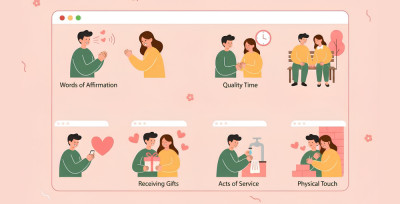
To make the framework actionable, think in terms of daily signals that a partner can reliably perceive. Instead of abstract promises, focus on tangible cues: words, time spent, helpful actions, thoughtful tokens, and caring touch. When these cues are delivered in a way your partner recognizes, the experience lands as warmth rather than noise.
For clarity and comparison, many educators summarize common love language types with practical illustrations and watch‑outs. The goal is to translate intention into behavior that feels unmistakable to the receiver. As you read, pinpoint two or three ideas you can test this week and review the results together.
| Category | Signals That Land | Common Pitfalls | Daily Micro‑Habits |
|---|---|---|---|
| Words of Affirmation | Specific praise, gratitude, and encouragement about effort or character | Vague compliments, empty flattery, or praise only after problems | One sincere sentence in the morning naming a concrete action you appreciated |
| Quality Time | Undivided attention, shared activities, device‑free conversation | Multitasking, constant interruptions, or rescheduling promises | Fifteen focused minutes after work to debrief the day without screens |
| Acts of Service | Helpful tasks done proactively and competently | Doing the “wrong” task, scorekeeping, or expecting applause | Choose one nagging chore and finish it before being asked |
| Receiving Gifts | Thoughtful tokens that show attentiveness and memory | Expensive but impersonal items, or gifts as substitutes for presence | Bring a small item tied to an inside joke or current goal |
| Physical Touch | Affectionate, consensual contact that soothes and bonds | Assuming touch is always welcome, or ignoring context and timing | Greet with a hug and linger for a few breaths to sync nervous systems |
When newcomers ask what are the five love languages, the simplest summary is that each category represents a channel where care is encoded and reliably decoded. Rather than argue about which is “best,” couples can treat channels like tools and choose the right tool for the moment. Mastery comes from practice, feedback, and small course corrections. Beyond tidy labels, the concise phrase 5 love languages helps families, friends, and teammates coordinate nurturing routines without overcomplication. It gives everyone a quick reference for brainstorming supportive actions in busy seasons. Over time, that shared playbook becomes an easy way to steer the relationship toward stability and joy.
- Start with one micro‑habit per category and notice which lands strongest.
- Keep a shared note where you log “hits” so you can repeat them.
- Review weekly: add one, refine one, and drop one that missed.

Applying the Framework: Assessment, Conversation, and Habit Design
Assessment should feel like discovery, not an interrogation. Approach it as a joint experiment where curiosity leads the way and blame has no seat at the table. When insights surface, translate them into specific behaviors that can be repeated without much effort. During check‑ins, partners can say a sentence like, “In this season, my love language shows up through quiet evenings and a little help with logistics,” and then compare notes. That concrete phrasing turns preferences into plans you can actually put on a calendar. Keep the tone light, exploratory, and generous.
For structured reflection, many couples try a brief love language test alongside journaling and real‑world trials. The self‑report results become a hypothesis you validate through behavior. If results and reality diverge, trust the behavior; it reveals what truly lands. Readers on a budget can explore a reputable love language test free option while pairing it with weekly debriefs about what felt meaningful. The combination of a quick quiz and field testing delivers faster clarity than theory alone. With this rhythm, you will iterate toward habits that actually nourish both partners.
- Set a 20‑minute weekly sync to celebrate what worked and refine what didn’t.
- Pick one behavior to spotlight each week, and keep it effortless.
- Use reminders or shared calendars to protect your connection rituals.
Take 5 Love Languages Test Online
Get StartedFrequently Asked Questions
-
How do expression styles improve communication without adding pressure?
They provide a shared map so both partners can find the fastest route to feeling valued, which lowers friction and reduces mind‑reading. By selecting a small number of reliable behaviors, couples conserve energy for play, creativity, and problem‑solving.
-
Can partners have more than one primary preference?
Absolutely, preferences often cluster, and they can shift with context such as stress, milestones, or health changes. A blended approach outperforms rigid labeling, because it acknowledges nuance while keeping actions simple.
-
What’s the best way to identify personal and shared patterns?
Start with short quizzes and quick experiments, then observe what reliably lands over a few weeks. If you enjoy structured tools, consider trying a reputable 5 love languages test in tandem with journaling and feedback.
-
How should parents adapt the framework for children?
Focus on safety, consistency, and age‑appropriate signals, and let kids lead with their responses. Many families find that exploring love languages for kids helps tailor routines that feel comforting and fun.
-
How often should couples reassess and update their routines?
A monthly review works well for most, with a deeper reset during big life transitions. If you like formal tools, you can revisit a trusted free love language test seasonally to spark fresh ideas and compare notes over time.